This guide covers the postoperative portion of one patient’s bilateral lung nodule surgery story. It focuses on chest drains, thirst and oral intake, an episode of severe abdominal and diaphragm-area spasms, mobilisation, drain removal, discharge, ward arrangements, caregiver support, and reported cost. This is not a recovery protocol. Bilateral thoracic surgery can involve different operations and risks. Follow the treating surgical team’s instructions for drinking, eating, getting out of bed, drain care, breathing exercises, pain control, and discharge.
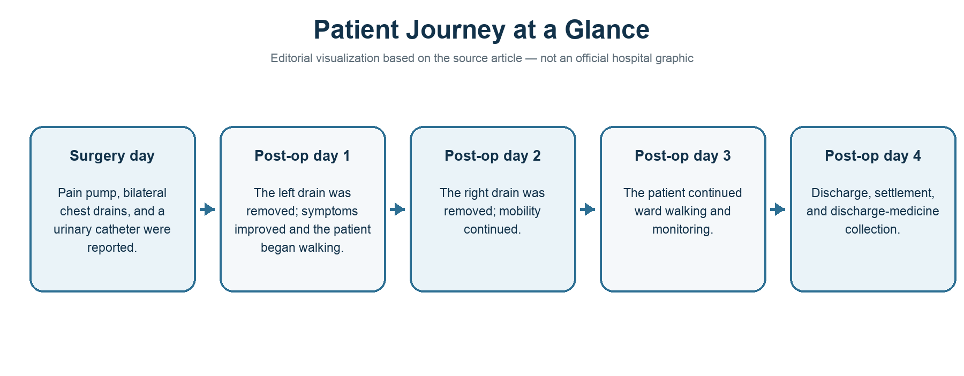
The patient reported a pain pump, one chest drain on each side, and a urinary catheter. Oral fluids were delayed for four hours and a small amount of porridge was taken later. The nurse advised remaining in bed on the operation day.
That evening, the patient developed repeated diaphragm-area and lower-abdominal spasms with tightness and difficulty speaking continuously. Recorded oxygen saturation and heart rate were described as normal, but the symptoms were severe and interfered with breathing and sleep. New or severe symptoms after thoracic surgery should always be reported immediately; normal spot observations do not rule out every complication.
After the left chest drain was removed, the patient said the spasms improved substantially over about an hour. By midday the symptoms had mostly settled, appetite and sleep improved, and the patient later walked slowly with the infusion stand.
The source describes a high-protein diet instruction, but nutritional targets after surgery depend on kidney function, swallowing, appetite, metabolic needs, and the clinical plan. Patients should follow the hospital dietitian or treating team rather than copying quantities from this story.
The remaining right chest drain caused intermittent severe pain with position changes. Sitting upright reportedly offered some relief. Chest-drain pain, drainage amount or colour changes, air leakage, shortness of breath, fever, dizziness, or sudden deterioration should be reported to ward staff promptly.
The right drain was removed on the next postoperative day, after which the patient felt considerably more comfortable. Drain-removal timing depends on imaging, air leak, fluid output, lung expansion, and the surgeon’s assessment.
The patient walked repeatedly around the ward after the team permitted mobilisation and was discharged on the fourth postoperative day. Early mobilisation is commonly used in postoperative care, but the timing, assistance level, oxygen needs, fall precautions, and walking target must be individualized.
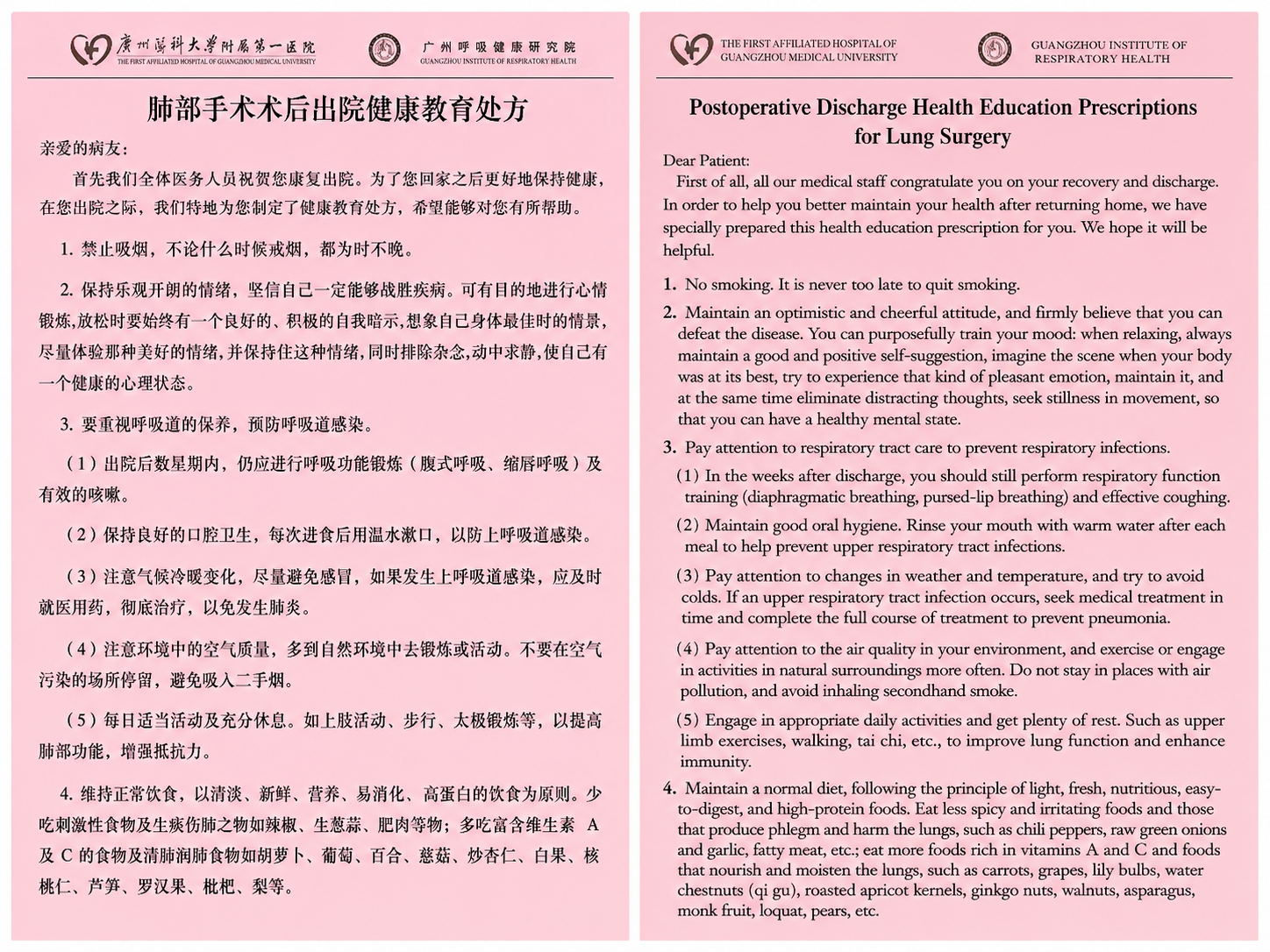
After settlement, discharge medicines were reportedly collected near the discharge-payment area using a self-service machine. Confirm the current process and obtain a written medication list, wound instructions, pathology plan, follow-up appointment, and emergency contact route.
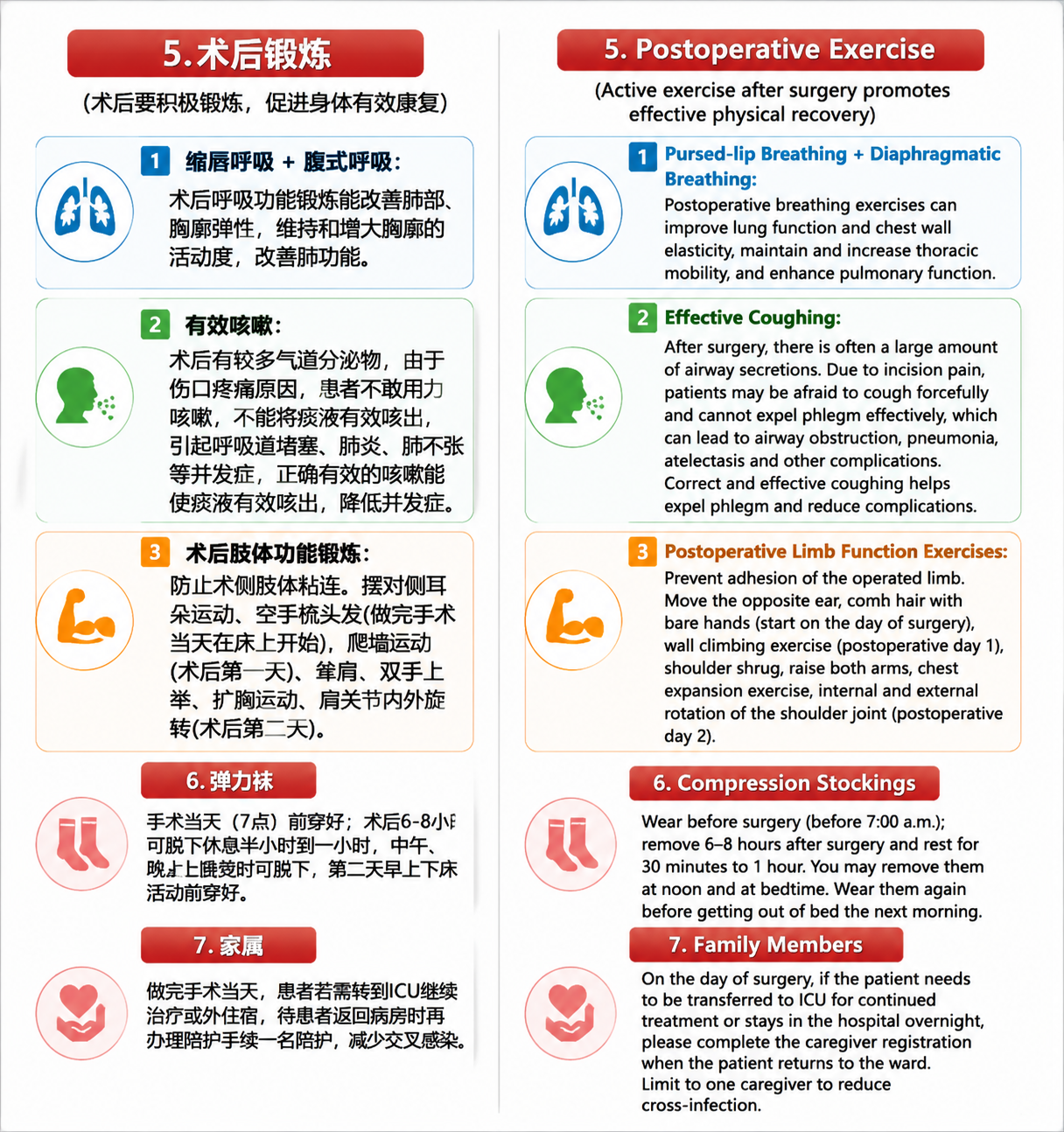
The source reports two- and three-bed rooms, an independent bathroom, a fold-out caregiver bed, cool air-conditioning, hospital clothing, and optional paid care-worker support. Room availability and charges may change and were not independently verified.
A caregiver may want to bring a blanket or sleeping bag, comfortable non-slip footwear, chargers, and a concise medication and medical-history list. Ask the ward what personal items are permitted.
The patient reports a total above RMB 70,000 and out-of-pocket spending above RMB 16,000. These figures are not a quotation and may reflect bilateral surgery, insurance status, tests, pathology, room charges, medicines, consumables, and the specific admission.