This patient experience describes the process of adenoid surgery for a child at The First Affiliated Hospital of Sun Yat-sen University in Guangzhou. The hospital is a major tertiary academic medical center in Mainland China and provides structured day surgery services for local and cross-border patients.
The child had long-term snoring during sleep, mouth breathing, allergic rhinitis, and sinusitis. Nasopharyngoscopy showed approximately 75% adenoid blockage, and sleep screening indicated reduced blood oxygen and mild respiratory obstruction. Because poor sleep quality had affected physical development, the family decided to follow the doctor's recommendation for surgery.
The family first registered for an otolaryngology specialist appointment. After the professor scheduled surgery, the patient received a preliminary appointment form for day surgery and completed anesthesia evaluation. The anesthesia visit included routine measurements, medical history review, allergy history review, blood tests, electrocardiogram, and chest X-ray. The nurse explained surgical precautions, and the hospital confirmed the child's condition by phone one day before surgery.

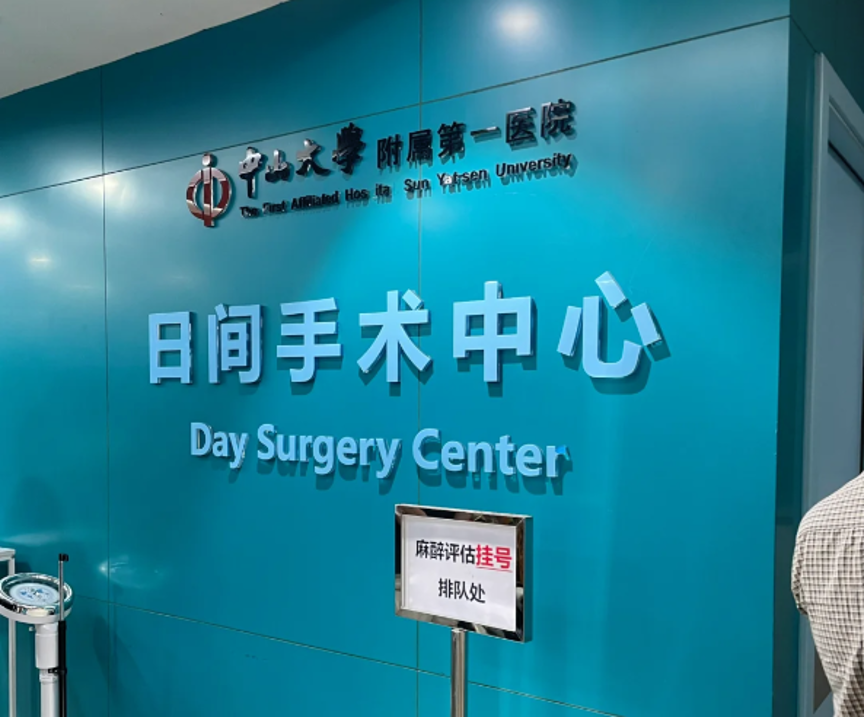
The family arrived at the day surgery unit as instructed. The doctor explained surgical risks, obtained consent, and reviewed postoperative medication. Family members could accompany the child through the first door, then waited outside the operating room while progress was shown on the hospital screen and mobile app. Around one hour later, the operation was completed, followed by wake-up monitoring and approximately two hours of observation before discharge preparation.
The child had a low-grade fever on the night of surgery. The doctor explained that this can occur during postoperative recovery and advised using antipyretics only above the stated threshold. The low-grade fever resolved after two days. The child took antibiotics for three days and cetirizine hydrochloride for allergic rhinitis. Halitosis started on the third day and was managed with hospital-provided mouthwash.
At the one-week follow-up, the child had a slight runny nose. The doctor recommended strengthening immunity and exercising more, and desensitization treatment was discussed if conditions allowed. One month after surgery, snoring during sleep had improved significantly.
For Hong Kong families and international patients considering pediatric specialist care in Mainland China, this case shows a structured care pathway involving specialist consultation, preoperative evaluation, same-day pediatric adenoid surgery, postoperative observation, and short-term follow-up planning.