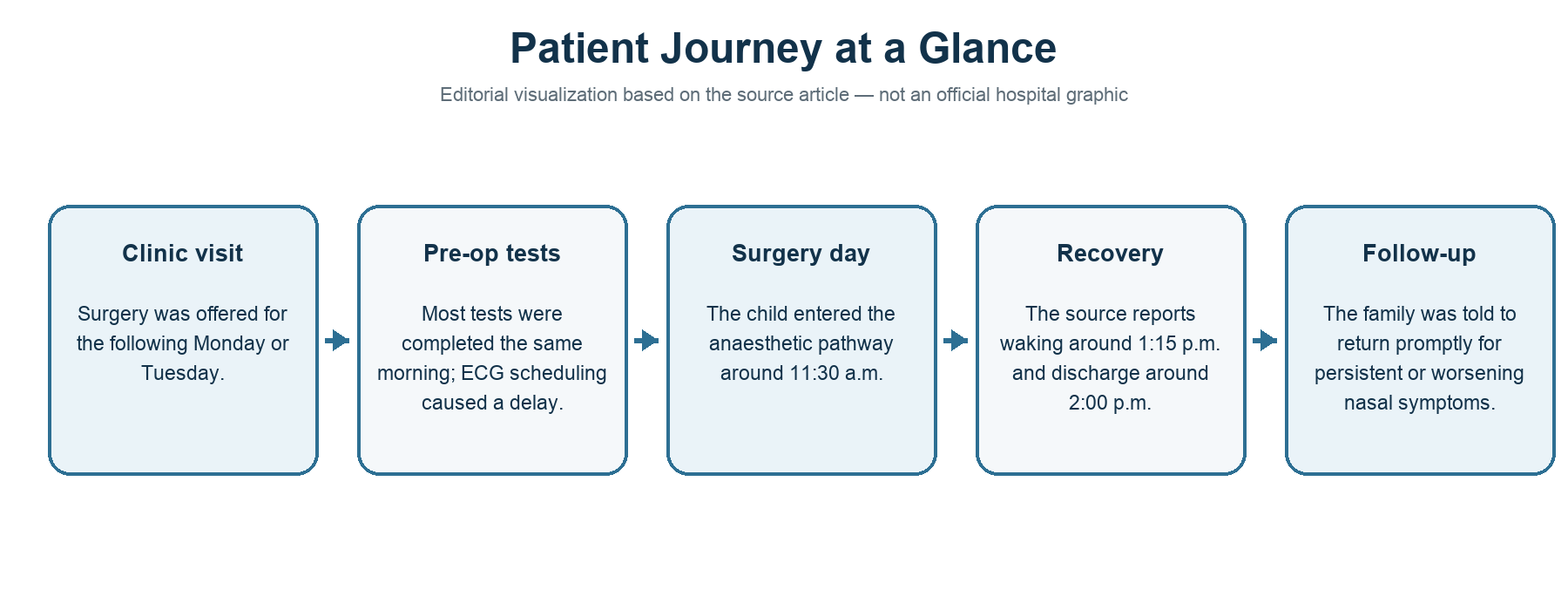
This guide reorganizes one parent’s account of a child’s adenoid operation into a practical preparation and recovery pathway. It covers appointment access, pre-operative testing, day-surgery timing, medicines mentioned by the family, food and fluids, commercial insurance, discharge, and follow-up. The reported timeline, prescriptions, anaesthetic explanation, cost, and follow-up plan applied to this child only. Parents should use the surgical and anaesthesia team’s current instructions as the controlling guidance.
The family described a relatively short interval between consultation and surgery, but obtaining the specialist appointment took about a week. They arrived early for additional appointment access and completed most pre-operative tests before 10:00 a.m.
The major practical difficulty was the electrocardiogram (ECG): when the family tried to book it at about 9:00 a.m., no same-day slot remained. Families travelling from outside Guangzhou may want to ask in advance whether valid tests from another hospital are accepted and how that affects insurance settlement.
Confirm the exact procedure, whether tonsil surgery is also planned, fasting and drinking cut-offs, accepted pre-operative tests, ECG availability, and whether the case is suitable for day surgery.
The source suggests asking the doctor to write down exact instructions for any medicines the family plans to obtain independently. Do not calculate or infer a child’s dose from this article; paediatric dosing must come from the treating clinician or pharmacist.
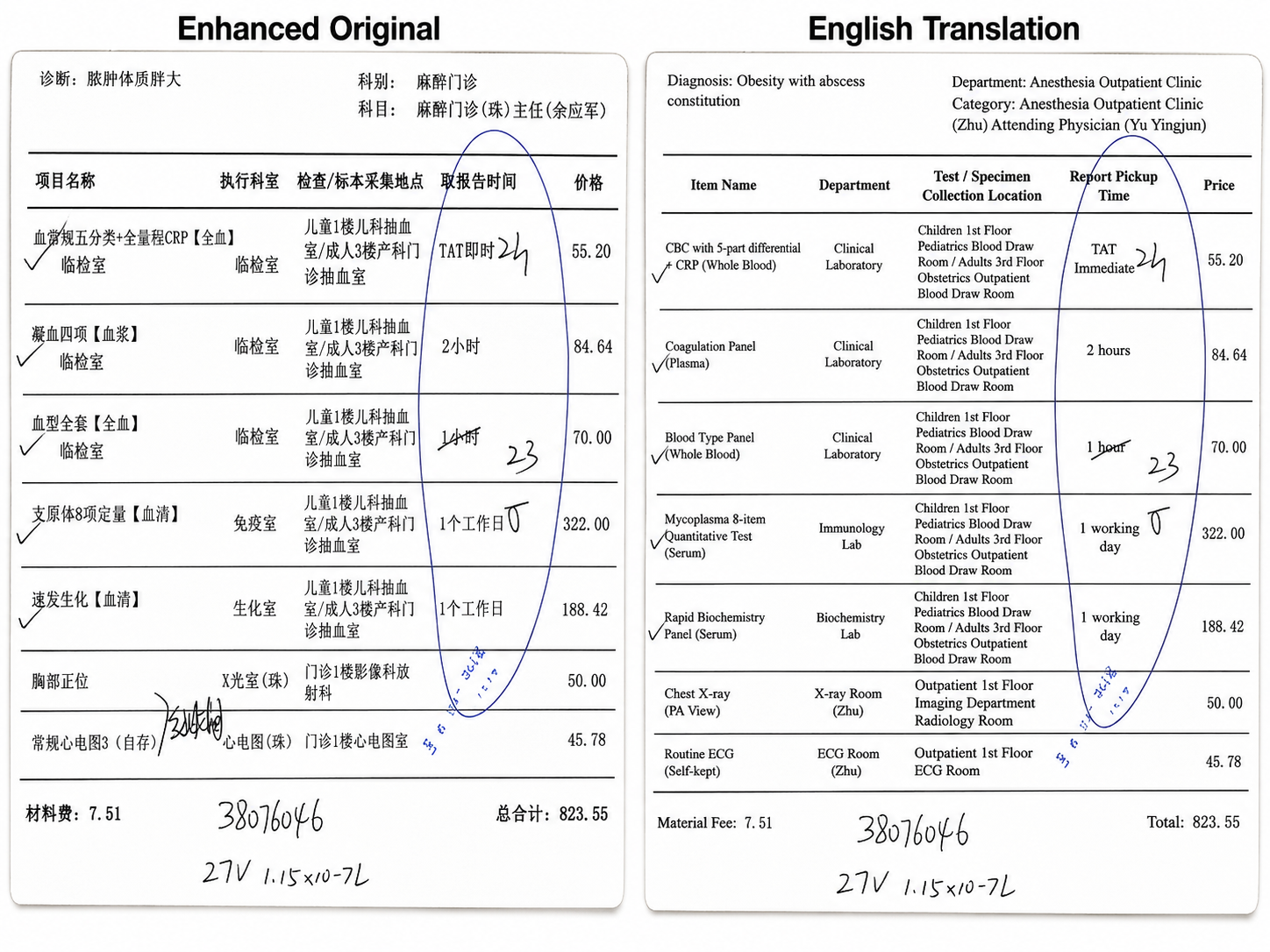
The family believed operating order was influenced by arrival time, but their scheduled time changed after the child was given water. This illustrates why families should confirm fasting and fluid instructions directly with the surgical team before giving anything by mouth.
The source reports general anaesthesia and a same-day recovery pathway. Anaesthetic technique is individualized; parents should discuss airway history, recent respiratory infection, allergies, prior anaesthetic reactions, loose teeth, fasting, pain control, and nausea prevention with the anaesthesia team.
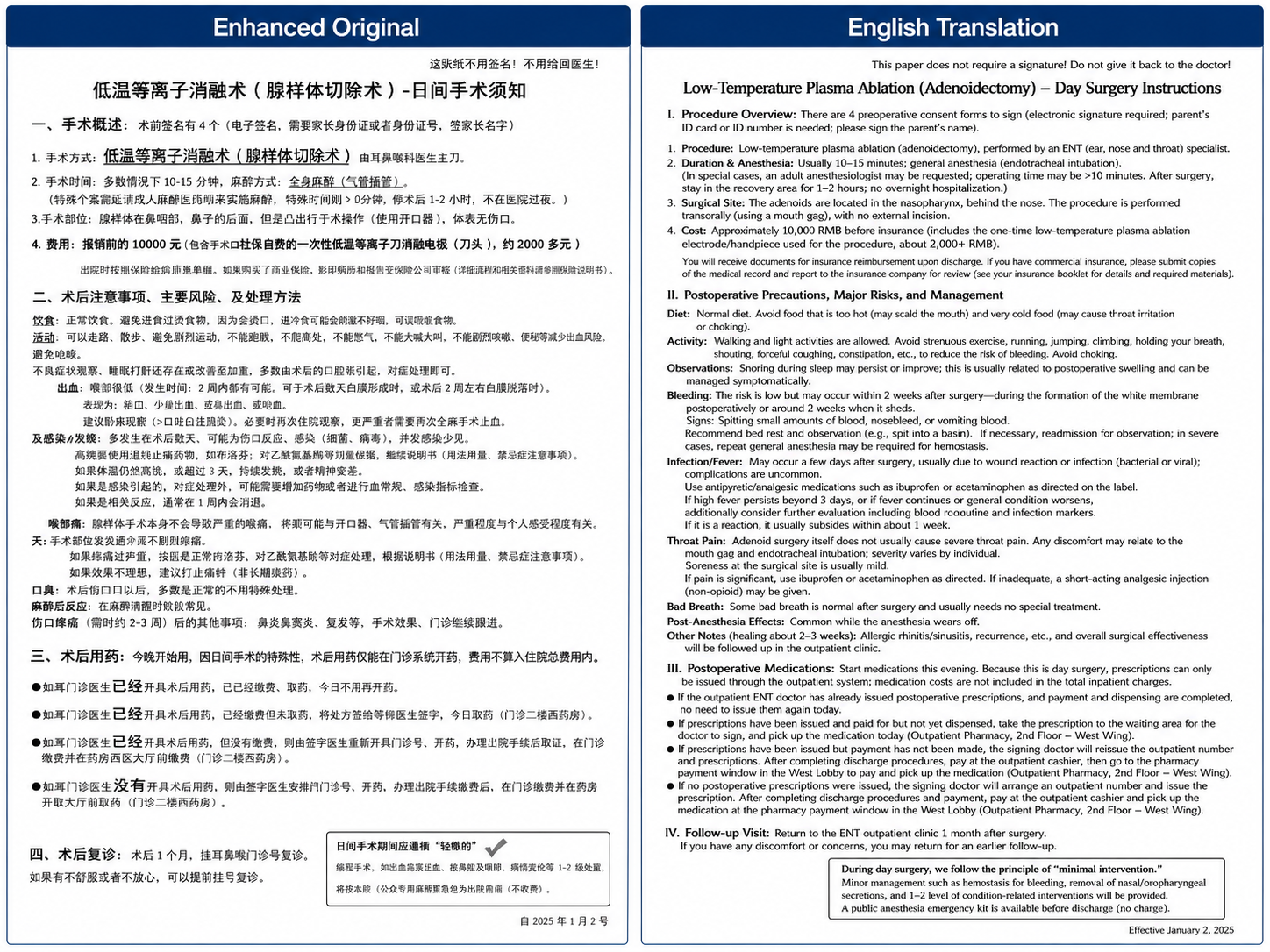
The family mentions cetirizine, mometasone, and either amoxicillin-clavulanate or cefaclor after surgery. This is a record of what the source discussed, not a recommended regimen. Antibiotic need, drug choice, dose, duration, allergy risk, and nasal-spray timing must be prescribed for the individual child.
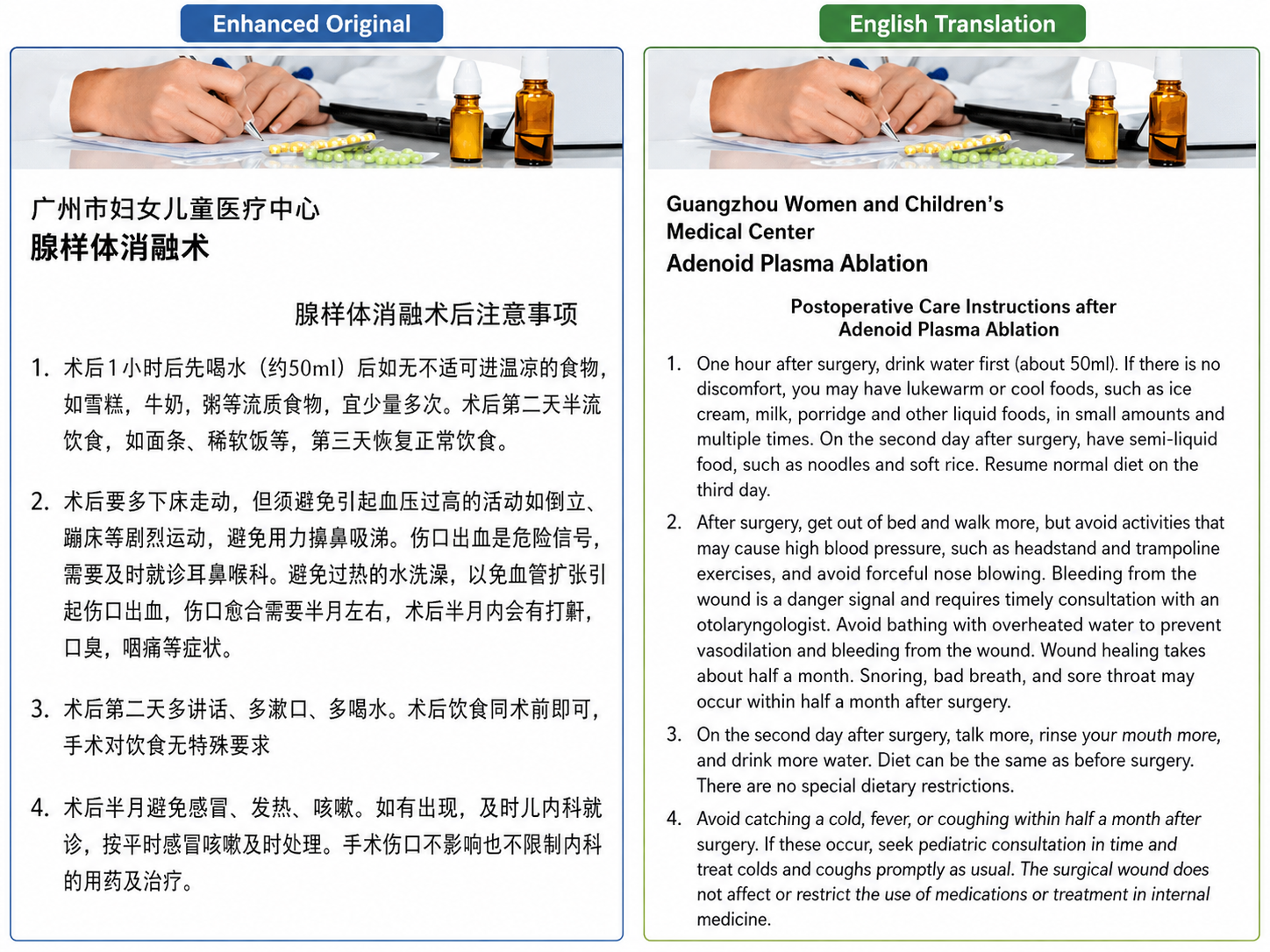
The hospital reportedly used water or an electrolyte drink and milk during the immediate recovery period. The child appeared tired after discharge and became more active later that afternoon. Recovery speed varies, and a child who is difficult to wake, has breathing difficulty, repeated vomiting, significant bleeding, dehydration, or rapidly worsening symptoms needs urgent clinical assessment.
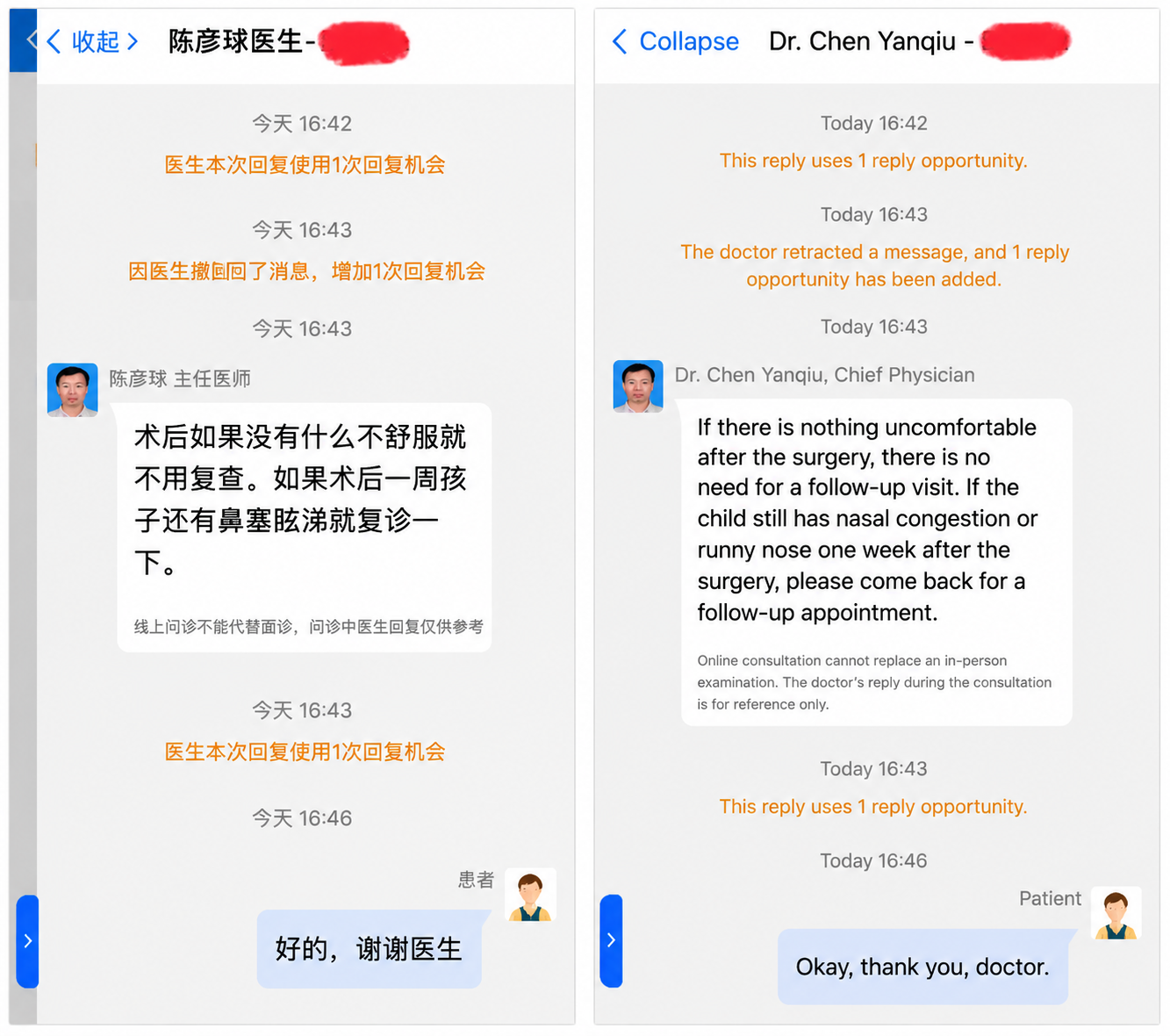
Follow-up advice differed by doctor in the source. The treating team’s written discharge plan should specify review timing, expected symptoms, activity and diet restrictions, pain control, and who to contact after hours.
The family reports a total cost of about RMB 10,000. This should not be used as a quote: cost varies with the procedure, tests, medicines, insurance settlement, complications, room or day-surgery arrangements, and current hospital pricing.
The source also warns that commercial insurers may examine when symptoms first appeared relative to policy purchase and waiting periods. Families should disclose history accurately and obtain written coverage confirmation from the insurer before surgery.