This guide turns one patient-experience article into a practical outpatient pathway for international, Hong Kong, and cross-border patients. It is not an official hospital instruction sheet. Appointment, insurance, location, and reimbursement rules may change; confirm them before travel.
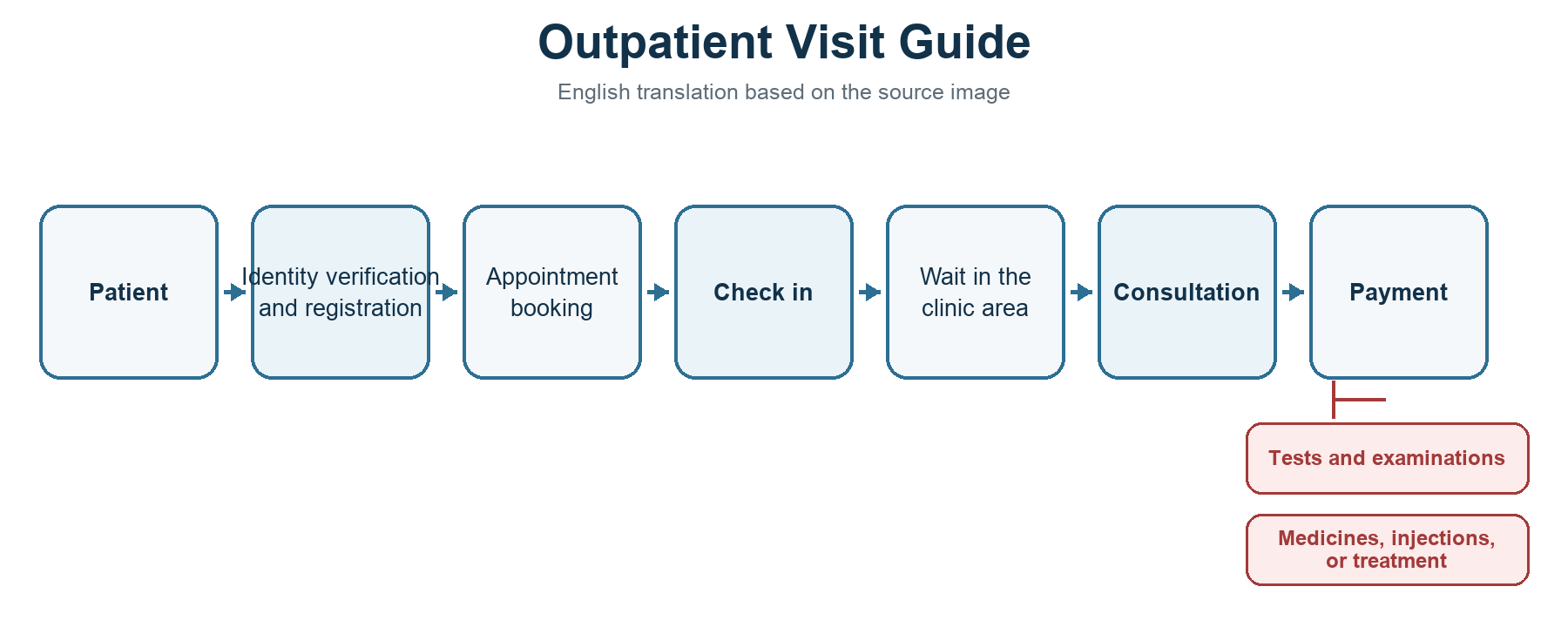
Large tertiary hospitals in Mainland China often use several connected systems: an appointment platform, identity verification, a hospital patient profile, medical-insurance linkage, mobile or kiosk check-in, payment, test booking, and pharmacy collection. First-time or out-of-area patients may need extra steps at a staffed service window.
The source article reports that the process became smooth once the author understood it. New visitors should still allow extra time, keep their documents together, and ask the hospital service centre when instructions are unclear.
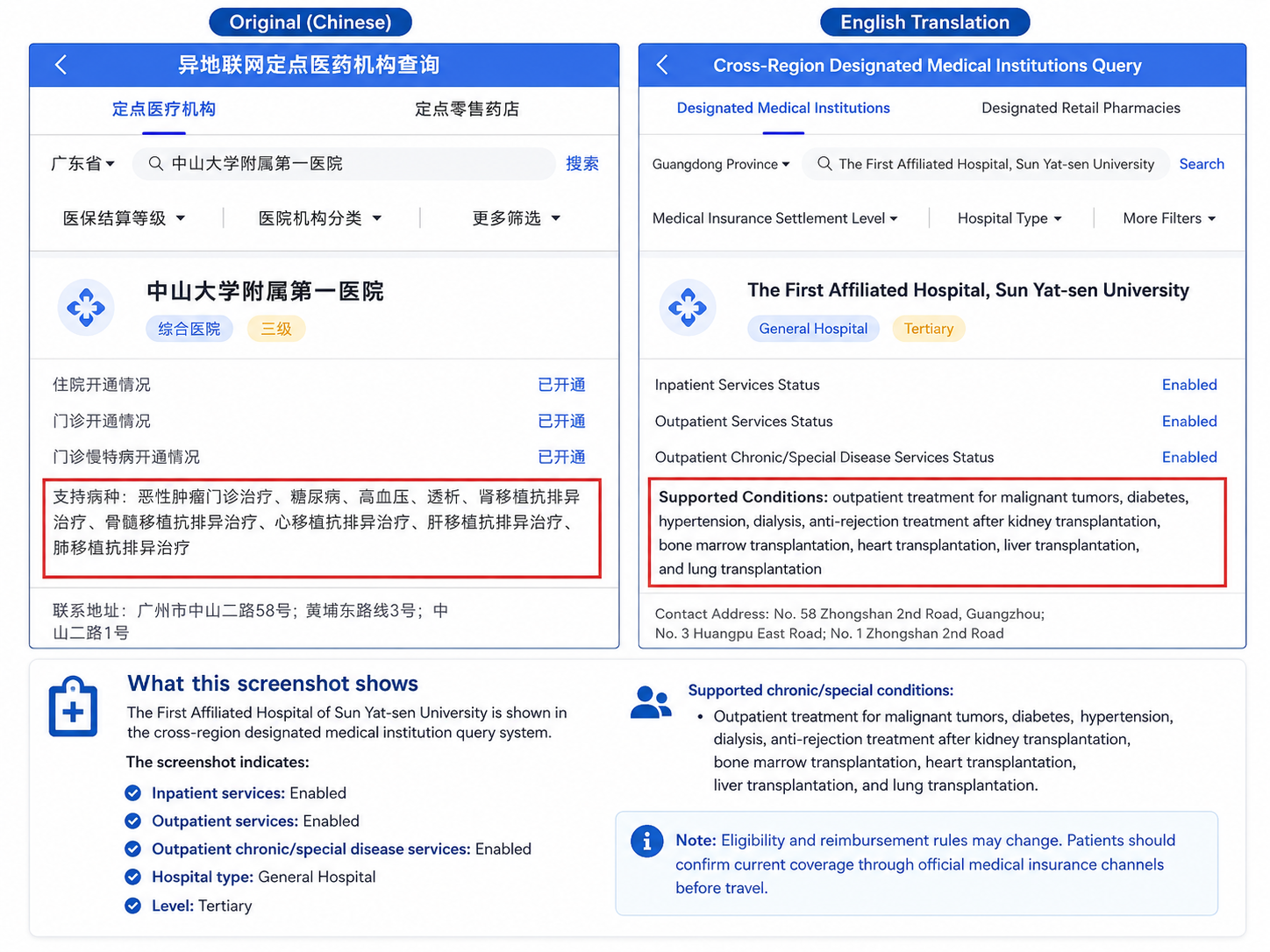
According to the source, patients using public medical insurance from another city or province should complete out-of-area medical-treatment filing before travelling. The article includes a screenshot showing the hospital in an out-of-area network-hospital search, but network status and eligible services are time-sensitive.
Confirm four points before departure: whether filing is required, whether the hospital and intended service are covered, whether a referral or designated-hospital selection is needed, and which identity or insurance code must be presented.
Bring:
Keep original records and a digital backup. Patients travelling from Hong Kong or overseas should also check which identity document the booking platform accepts and whether a Mainland mobile number or WeChat access is needed.
The author reported that appointments were released at 8:00 a.m. for the eighth day ahead and recommended entering the system shortly before release. The article also gives same-day time ranges, but the wording is internally ambiguous and should not be used as a guaranteed schedule.
Use the hospital’s current official appointment channel to check the relevant clinic, doctor, campus, session, and release time. Do not assume that rules reported for one clinic apply to every specialty.
The source recommends arriving about 30 minutes before the appointment. First-time patients using out-of-area insurance may need to visit a staffed window to link the insurance account with the hospital system. The same may apply to patients using chronic- or special-disease outpatient benefits. Later transactions may then become available at self-service kiosks.
After registration and any required insurance linkage, check in through the hospital’s mobile system or a self-service kiosk. The article reports last check-in times of 11:00 a.m. for the morning session and 4:00 p.m. for the afternoon session. These cut-offs are source-reported and must be reconfirmed.
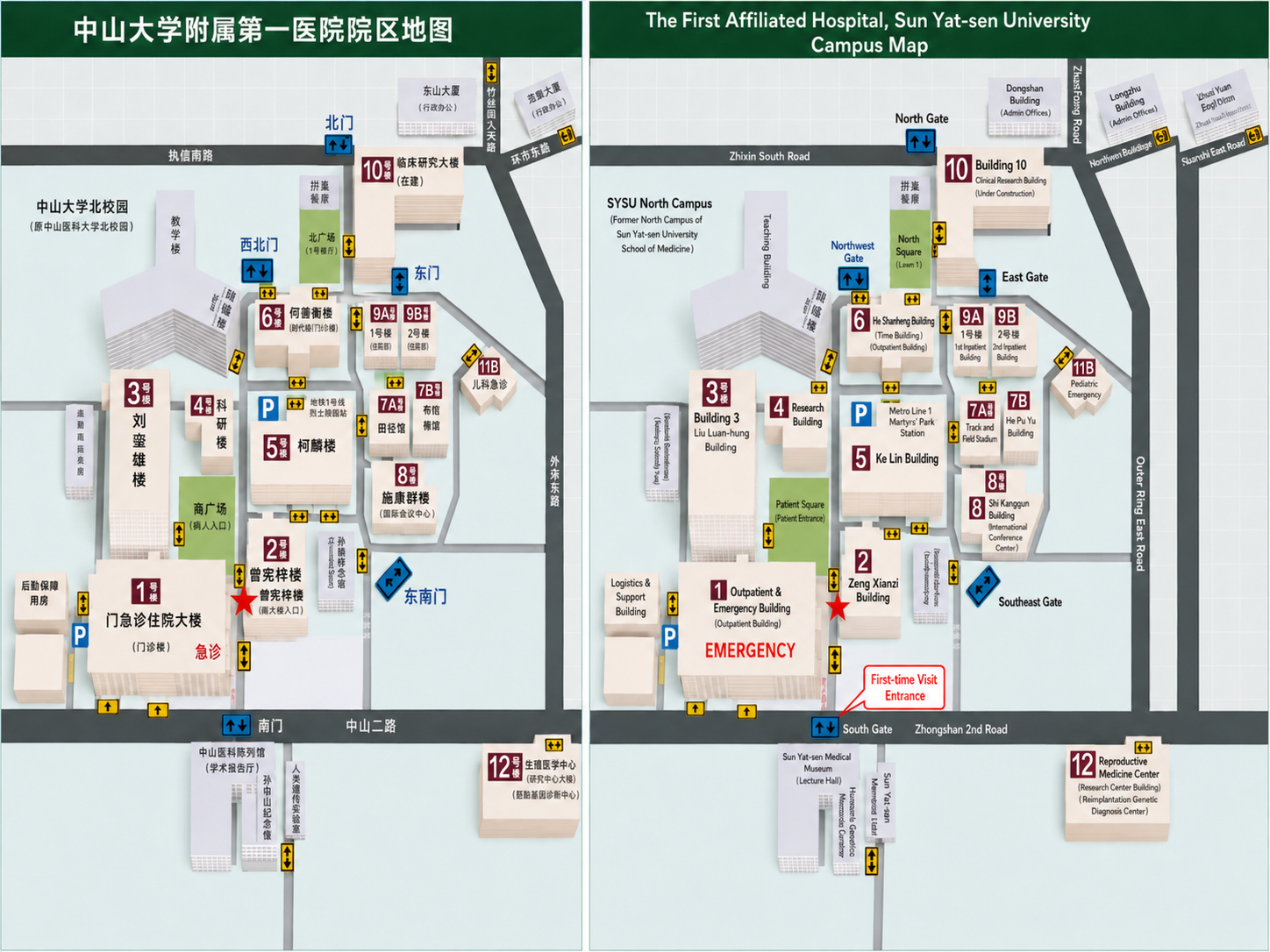
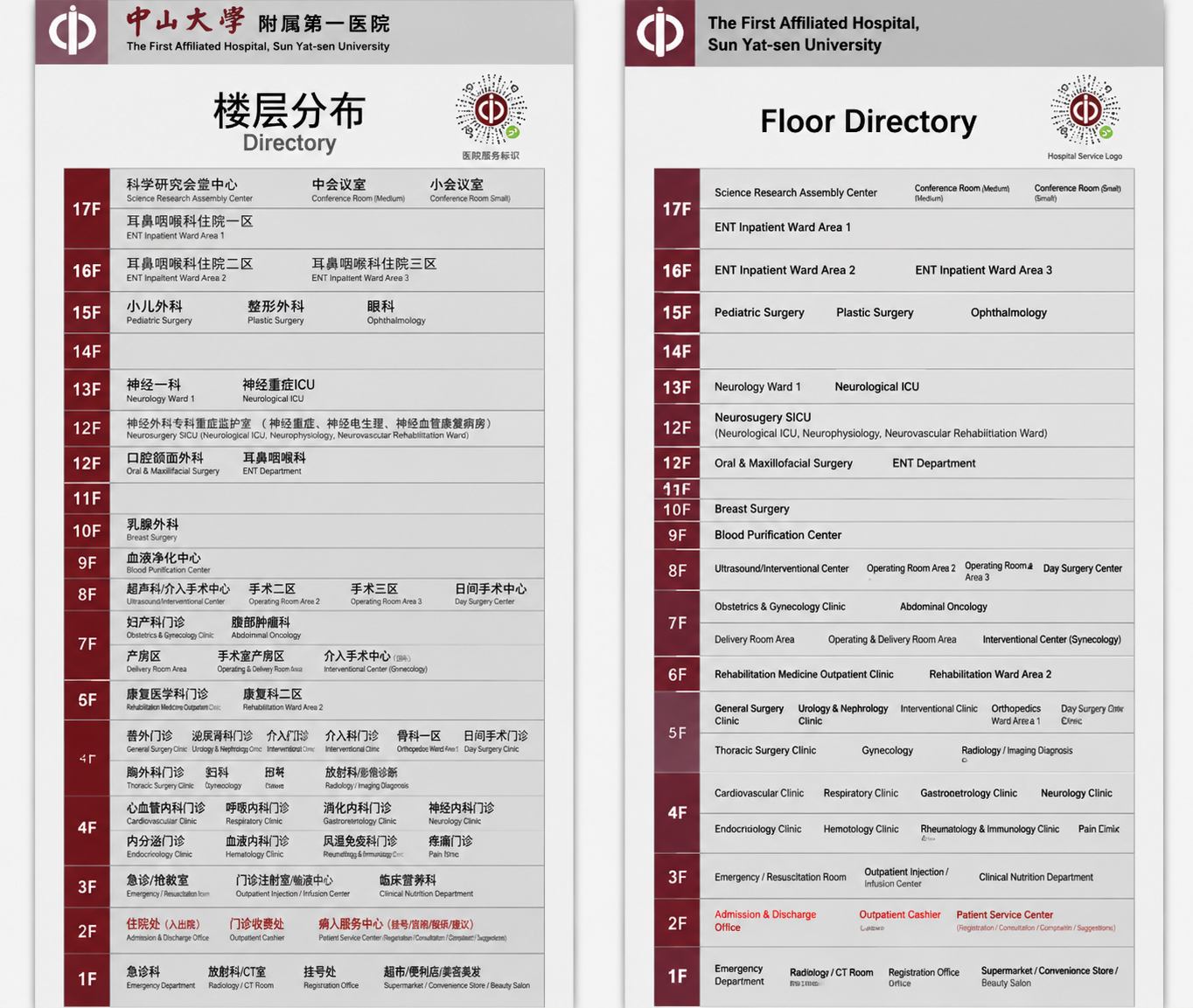
Check the appointment slip or mobile appointment record for the outpatient building, floor, clinic area, and room. The source notes that elevator areas display floor directories and that patients wait for their number after checking in.
The archived article contains a campus map and an outpatient floor directory, but some labels are too small for reliable full English translation. Use on-site signage and the current appointment record as the controlling information.
While waiting, arrange reports in chronological order and write a short question list on your phone. A useful consultation note includes:
During the consultation, clearly describe symptoms and concerns. Record the clinic or test location, follow-up timing, preparation instructions, warning signs, and how results will be reviewed.
The source says routine payment may be available at a self-service kiosk. It also reports that patients using government-funded care, out-of-area insurance, or chronic/special-disease outpatient benefits may need a staffed payment window.
Coverage and settlement depend on eligibility, filing status, the service, the prescription, and local insurance rules. If direct settlement fails, ask what must be paid first and which documents are required for later reimbursement.
After payment, follow the location and workflow printed on the order or shown in the mobile system. The source describes three possible patterns: some tests can be performed directly, some require booking at a window or kiosk, and others are arranged at a nursing station.
For medicines, the article states that both the Chinese medicine and Western medicine outpatient pharmacies are on Level 2. It describes scanning at a kiosk and waiting for the collection number to be called. Confirm the current pharmacy and counter shown on the dispensing instruction.
If commercial insurance or secondary reimbursement is involved, the source recommends retaining:
Ask the payer for its exact checklist before the visit. The article advises patients to visit the hospital service centre for required stamping. Confirm which original documents must be stamped, whether electronic invoices are accepted, and whether translations are needed.