This patient experience describes a gastric stromal tumor care pathway across three tertiary hospitals in Guangzhou. The patient first received local testing after an elevated CA199 marker, then traveled to Guangzhou for specialist consultation, hospitalization, endoscopic treatment, pathology confirmation, and oncology follow-up.
The case involved The First Affiliated Hospital of Sun Yat-sen University, The Sixth Affiliated Hospital of Sun Yat-sen University, and Sun Yat-sen University Cancer Center. It is shared as an informational patient story and should not be treated as medical advice.
In March, the patient's father had a postoperative review for lung adenocarcinoma at a county hospital. CA199 was slightly elevated, so the doctor recommended abdominal CT and gastrointestinal endoscopy.
On March 27, gastrointestinal endoscopy showed several intestinal polyps and a 3 cm x 3.5 cm submucosal bulge in the gastric body. The endoscopist suggested surgery at a major hospital in a first-tier city as soon as possible.
While waiting for gastroscopy biopsy results, the family arranged travel to Guangzhou and registered for gastrointestinal surgery appointments at The First Affiliated Hospital of Sun Yat-sen University and The Sixth Affiliated Hospital of Sun Yat-sen University. The family preferred The Sixth Affiliated Hospital because of its gastrointestinal specialty focus.
The patient's parents arrived in Guangzhou on April 3. On April 4, the family booked a special consultation at The First Affiliated Hospital of Sun Yat-sen University during the Qingming Festival. The doctor reviewed the gastroscopy report and abdominal CT images, initially diagnosed gastric stromal tumor, and proposed laparoscopic surgery.
The patient preferred endoscopic surgery because he wanted to avoid an incision, even a minimally invasive incision. This preference influenced the later treatment pathway.
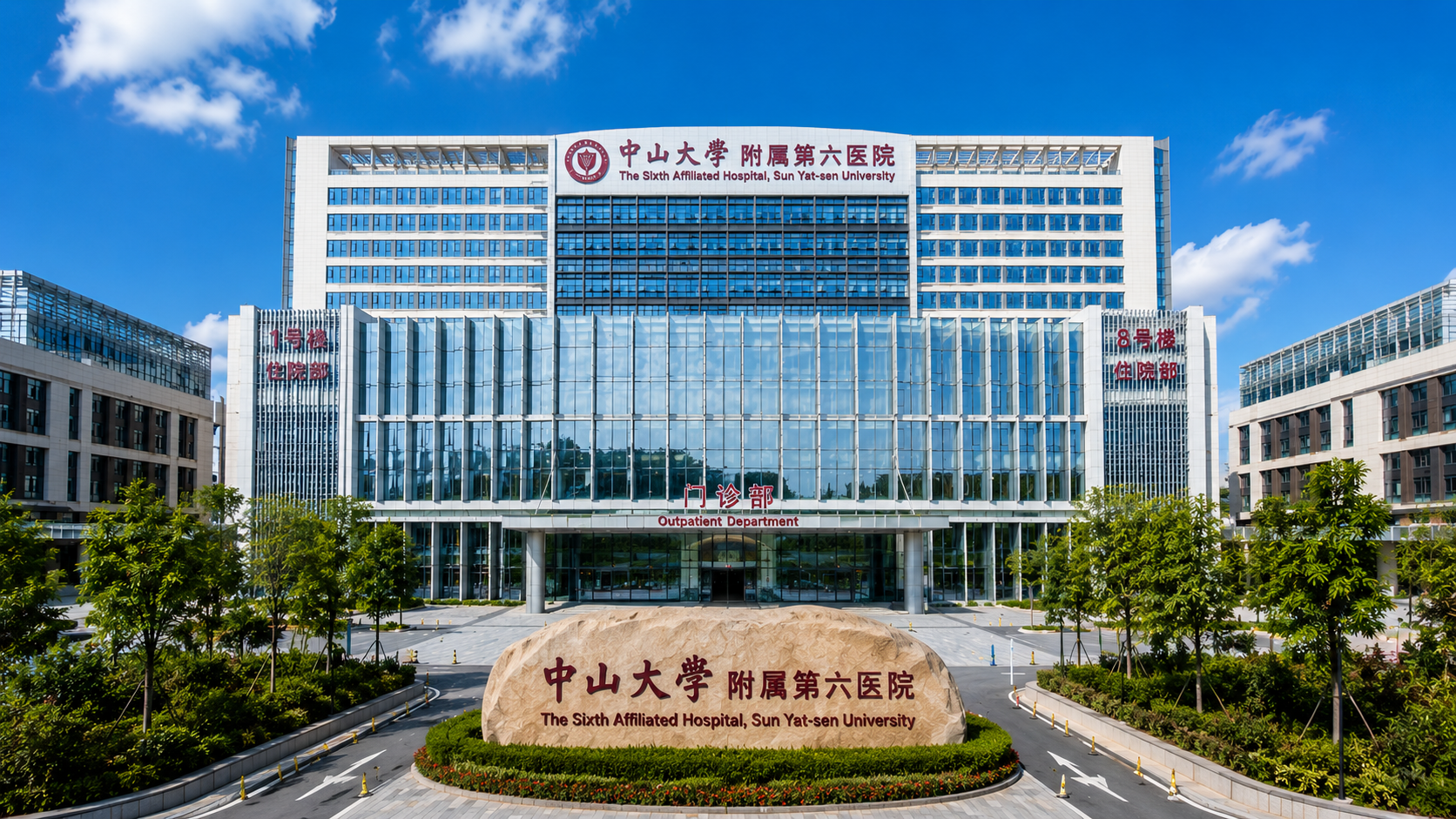
On April 7, the family consulted the director of the Department of Gastrointestinal Surgery at The Sixth Affiliated Hospital of Sun Yat-sen University. The director offered hospitalization for further examinations, followed by a decision between endoscopic resection and laparoscopic surgery. Hospitalization procedures were completed that morning.
From April 8 to April 10, the patient completed examinations including colonoscopy with removal of six polyps, endoscopic ultrasound, and enhanced chest and abdominal CT. The enhanced CT suggested a possible stromal tumor.
After additional review, the plan for gastric ESD, or Endoscopic Submucosal Dissection, was confirmed. Although the patient stayed in a surgical ward, the procedure was performed through the Endoscopy Center.
The surgery was scheduled for the late afternoon of April 16. The family arrived early, checked in at the Endoscopy Center, and signed the risk notification and related documents.
The patient entered the waiting area without accompaniment. The family waited until the early evening, when a nurse allowed them to enter the waiting area. The patient was lying down, not fully awake, with a gastric tube inserted. At around 6 pm, an orderly pushed the patient back to the ward for intravenous infusion.
From April 16 to April 18, the patient received milky white nutrient solution by intravenous infusion. The gastric tube was removed on the morning of April 19, and the patient began a small amount of liquid food.
Discharge procedures were completed soon after. The total cost was less than 30,000 RMB. After cross-provincial medical insurance settlement, the out-of-pocket expense was less than 5,000 RMB, and the excess deposit was automatically refunded.
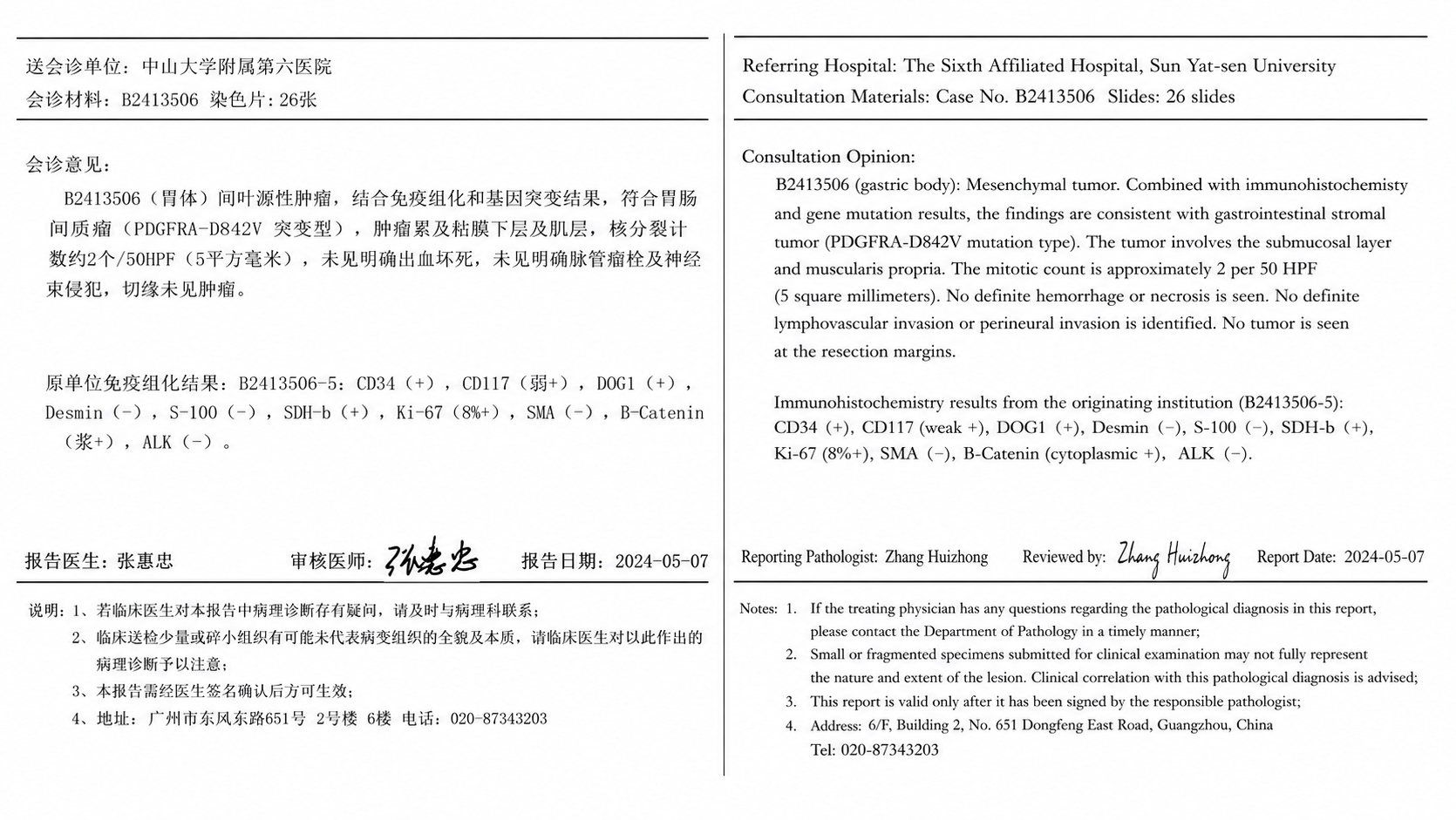
The pathology result was not available at discharge. On April 24, the pathology report was released and initially indicated a submucosal mesenchymal tumor. Further immunohistochemistry and molecular testing were recommended.
On April 30, the additional immunohistochemistry and genetic testing results confirmed gastric stromal tumor. The family later consulted Dr. Qiu Haibo at Sun Yat-sen University Cancer Center, a specialist in stromal tumors.
Dr. Qiu did not fully agree with the original ESD plan and noted that laparoscopic surgery may have carried lower postoperative uncertainty. The family submitted stained slides for pathology consultation at Sun Yat-sen University Cancer Center. On May 8, the detailed pathology consultation result showed a mitotic count of 2.
At the follow-up consultation, the doctor explained that the tumor was a rare mutant type of stromal tumor, accounting for approximately 5%. No medication was needed temporarily, but regular enhanced chest and abdominal CT follow-up was recommended.
Including genetic testing and out-of-pocket special consultation fees, the total out-of-pocket cost was less than 10,000 RMB. The ESD pathway allowed fast recovery, with the patient basically returning to normal within less than one week after surgery, but the case also shows why specialist pathology review can be important for rare tumors.
For patients considering specialist care in Mainland China, this experience highlights the value of preparing previous imaging, endoscopy reports, pathology materials, insurance information, and a clear plan for follow-up. It also shows that different specialists may recommend different surgical approaches for the same condition.